
Root canal treatment in Querétaro, Mexico
Endodontic treatment to treat the inside of an affected tooth and save it when the conditions of the case allow.
What is a root canal treatment?
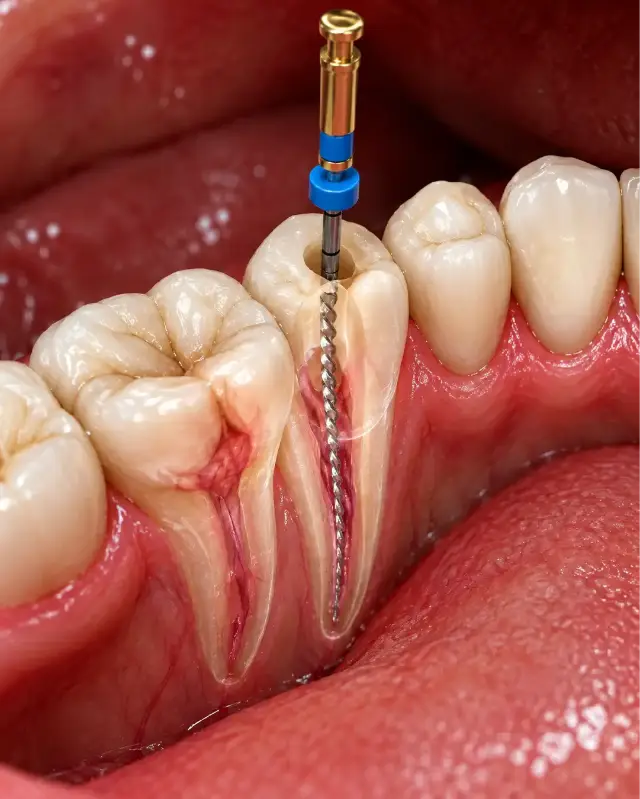
Root canal treatment, also known as endodontics, treats the inside of an affected tooth. When indicated, the damaged pulp tissue is removed, the canals are cleaned and disinfected, and they are sealed. Its goal is to save the tooth when it can be restored.
Do you have tooth pain? These signs may mean you need an evaluation
Any of these can be a sign that calls for an evaluation. Not all of these symptoms necessarily mean you need a root canal: the diagnosis must be made by a professional.
- Severe or persistent pain
- Prolonged sensitivity to cold or heat
- Pain when biting
- Swelling
- Change in tooth color
- Sensitivity around the tooth
- A previous blow or trauma
- Deep cavity
When is a root canal needed?
A root canal may be considered when the pulp, the tissue inside the tooth, is compromised. Not every deep cavity requires a root canal.
- Deep cavities
- Trauma
- Tooth fractures
- Previous dental procedures
- Inflammation or infection of the pulp
Can a root canal prevent a tooth extraction?
When a tooth can be saved and restored, a root canal can be an alternative to extraction. It is not always possible. The decision depends on:
- The tooth structure that remains
- The condition of the root
- The tissues surrounding the tooth
- Whether it can be restored
- The diagnosis
When a tooth cannot be saved, extraction may be considered and, afterward, options such as dental implants. No option is best for every case: it is defined at the evaluation.
Root canal or filling? How do you know which you need?
It depends on how deep the damage to the tooth goes and whether the pulp is compromised.
Superficial damage may be resolved with a restoration, while damage that reaches the inside of the tooth may require a root canal. Only a clinical evaluation can determine this.
How is a root canal performed?
The steps can vary from case to case:
01 — Evaluation and diagnosis
The tooth is examined, your symptoms are heard and it is determined whether treatment is necessary.
02 — Anesthesia
Local anesthesia is applied to control discomfort during the procedure.
03 — Access to the inside of the tooth
The pulp chamber is accessed to reach the canal system.
04 — Cleaning and disinfection
The affected tissue is removed and the canals are cleaned and disinfected.
05 — Sealing
The canals are sealed to prevent bacteria from getting in.
06 — Restoring the tooth
The tooth is restored to recover its function and protect it.
07 — Follow-up
The progress of the treated tooth is reviewed.
Why is diagnosis important before a root canal?
The evaluation helps determine:
At AlineaPro, the evaluation includes a clinical exam and X-rays, according to each patient's needs.
- Which tooth is affected
- How compromised it is
- The anatomy of its canals
- Whether the tooth can be saved
- What treatment may be needed
Does a root canal hurt?
Root canal treatment is performed with local anesthesia to control discomfort during the procedure.
Afterward there may be sensitivity or discomfort during recovery, depending on the condition of the tooth and each patient. Many people arrive with pain caused by inflammation or infection of the tooth, and treatment aims to address its source.
What to expect after a root canal
Sensitivity and care
There may be sensitivity or discomfort in the first few days. Follow your dentist's instructions and attend your follow-up check-ups. If discomfort increases or doesn't improve, contact your dentist.
Restoring the tooth
The treated tooth may need a later restoration to recover its function and protect the remaining structure. Not every case requires a crown: it depends on each tooth.
If you need to replace or rehabilitate teeth, learn about dentures and crowns.
How long does a tooth last after a root canal?
A tooth treated with a root canal can remain functional for many years, although no lifespan is guaranteed. It depends on:
- The tooth structure that is preserved
- The restoration
- Oral hygiene
- The health of your gums
- Your habits
- Professional follow-up
- The initial condition of the tooth
How much does a root canal cost in Querétaro?
The cost depends on each case. That's why there is no single price: first we need to evaluate your tooth. After the evaluation, the team explains the treatment and the corresponding cost.
Request an evaluationWhy can the price vary?
Each tooth has a different anatomy and may have a different number of canals. Also influencing it:
- The tooth treated
- The number of canals
- The complexity of the case
- Whether there is a previous treatment
- Additional procedures, if required
- The restoration afterward
Benefits of keeping your natural tooth
When clinically possible, keeping the natural tooth can offer advantages. Results depend on each case.
- Keeping the tooth
- Maintaining chewing function
- Maintaining esthetics
- Avoiding an extraction
- Making later rehabilitation easier
Why choose AlineaPro Dental for your root canal?
If this is your first visit, see what a first visit is like.
- Evaluation with a clinical exam and X-rays
- A personalized plan for your case
- Personal attention and answers to your questions
- Follow-up after treatment
Root canal treatment in Jurica, Querétaro, Mexico
AlineaPro Dental is located in Jurica, Santiago de Querétaro, Mexico, and welcomes patients who want an evaluation to learn about their treatment options.
Request an appointment76100 Santiago de Querétaro, Querétaro, Mexico
Frequently asked questions about root canal treatment
What is a root canal treatment?
Root canal treatment, also known as endodontics, treats the inside of an affected tooth: the damaged pulp tissue is removed when indicated, and the canals are cleaned, disinfected and sealed. It aims to save the tooth when it can be restored.
When is a root canal needed?
It may be considered when the pulp of the tooth becomes inflamed or infected, for example from a deep cavity, trauma, a fracture or a previous procedure. Only a clinical evaluation determines whether it is necessary in your case.
Does a root canal hurt?
It is performed with local anesthesia to control discomfort during the procedure. Afterward there may be sensitivity or discomfort, depending on the condition of the tooth and each patient.
How much does a root canal cost in Querétaro?
The cost depends on the tooth treated, the number of canals, the complexity of the case, any previous treatments and the restoration afterward. An evaluation at AlineaPro Dental determines the treatment and the cost for your case.
How long does a root canal take?
The length of treatment varies with the tooth and the complexity of the case. After the evaluation, the team tells you how much time and how many appointments are estimated for your case.
How long does a tooth last after a root canal?
No lifespan is guaranteed. It depends on the tooth structure that is preserved, the restoration, hygiene, gum health, your habits, follow-up and the initial condition of the tooth.
What happens after a root canal?
There may be sensitivity or discomfort during recovery. It is important to follow your dentist's instructions, attend follow-up and restore the tooth as indicated. If discomfort increases or doesn't improve, contact your dentist.
Do I always need a crown after a root canal?
Not always. It depends on how much tooth structure remains and on the tooth treated. In some cases a crown is indicated to protect the tooth; others can be restored in a different way. It is defined at your evaluation.
Does a root canal prevent extraction?
When the tooth can be saved and restored, a root canal can be an alternative to extraction. It is not always possible: it depends on the remaining structure, the condition of the root and the surrounding tissues.
What if I already had a root canal and the tooth still bothers me?
Persistent discomfort after a root canal may require a new evaluation. Don't ignore it: come in so a professional can assess your case and determine what options exist.
Want to learn more? Read the AlineaPro blog articles. You can also learn about the smile makeover.