

Treatment Comparisons
Root Canal or Extraction? How to Weigh Your Options
A painful or damaged tooth often leads to one question: save it or remove it? The honest answer is that it depends on the individual tooth, and only an examination can tell you. This article explains how the two options differ and what dentists look at.
What each treatment involves
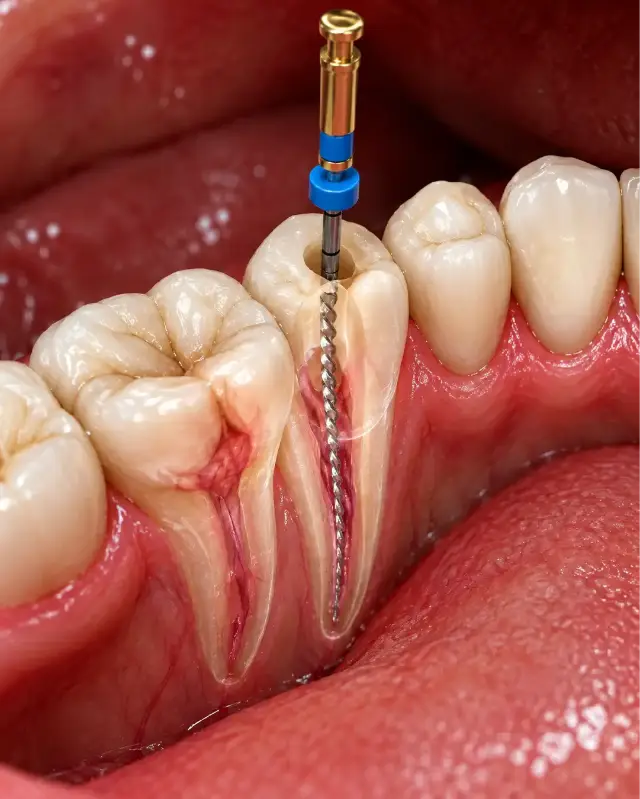
A root canal treatment removes the infected or inflamed tissue inside the tooth, cleans and seals the inside, and keeps the tooth in place. It is usually followed by a restoration such as a filling or crown to protect it.
An extraction removes the tooth. Depending on the situation, your dentist may discuss replacing it afterwards with an implant, bridge or denture. You can read about extractions on our dental surgery and extraction page.
What dentists consider
- How much healthy tooth remains. A tooth with very little structure left may not be restorable.
- Cracks or fractures. A crack that extends below the gum line can limit the options.
- Bone and gum health. Supporting tissues influence the long-term outlook of the tooth.
- The role of the tooth. Some teeth are more important for chewing than others.
- Your overall health and goals. Including your time, your priorities and what you plan to do afterwards.
A side-by-side look
- Keeping your natural tooth: a root canal preserves the tooth and its connection to the bone, and usually needs a restoration afterwards.
- Removing the tooth: extraction resolves the problem tooth, but leaves a gap that your dentist may recommend replacing, which means further treatment.
Neither option is automatically better. A dentist will weigh these factors for your specific tooth.
Questions to ask your dentist
- Can this tooth be restored predictably? What are the reasons for and against?
- What happens if I choose to wait?
- If we extract, what are my replacement options, and how do they compare to dental implants?
- What will the total treatment involve, including any restoration?
If you are in pain, do not wait for a blog post to decide. Request an appointment so the tooth can be examined.
Frequently asked questions
Is a root canal painful?
The procedure is performed under local anesthesia, so it should not hurt while it is happening. Some tenderness afterwards is common, and your dentist will explain how to manage it.
Can a tooth with a root canal fail later?
Any dental treatment can need follow-up over time. A well-restored tooth and good hygiene help, and your dentist can monitor it at regular check-ups.
Do I always need a crown after a root canal?
Not always, but dentists often recommend one for teeth that have lost a lot of structure. Your dentist will advise on your specific tooth.
This article is general information for patients. It is not a diagnosis or a substitute for an in-person evaluation by a dentist.
Request an appointment
Take the first step: get a personalized evaluation of your oral health and a clear treatment plan.
Request an appointment